web hit counter
Skip to content
 

How to Save Water?

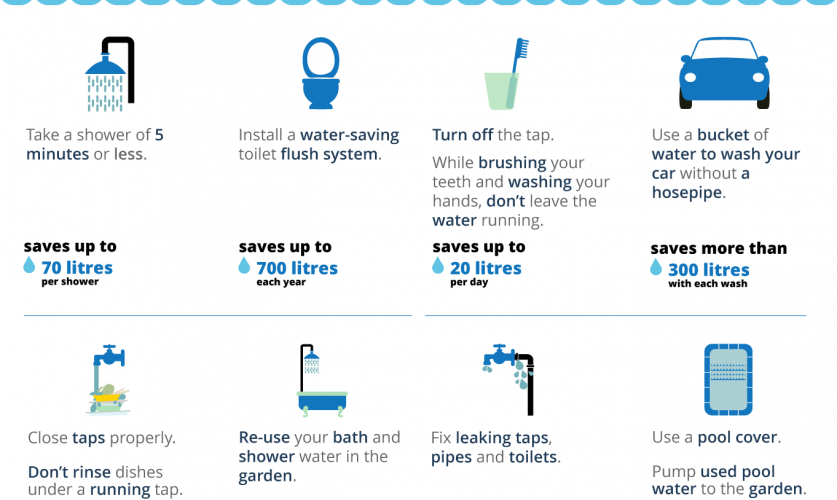
Water conservation will not only help you to save money, it can help reduce dependence on natural resources. In recent years many towns have had to force water conversation programs on its residents to ensure lake and reservoir levels don’t dip too low. A recent study showed that the average adult consumes as much as 100 gallons of water per day. There are plenty of small things you can do to help decrease your water usage and decrease your bills.

1. In the Kitchen

If you have a dishwasher, only use it when you have a full load to run. You can save water by washing dishes by hand. Fill one sink with wash water and one with rinse water to avoid running the water while you rinse your dishes. Leave the pots and pans that have stuck on food for last. This way you can use the wash water to allow these to soak instead of needing to run the water again. You can also install a heater in your kitchen sink. These heaters will give you instant hot water as soon as the tap is turned on, eliminating the need to allow water to run while it heats up.

2. Laundry Room and Bathrooms

In the laundry room you can save water by only washing a load of clothes when you have a full load. Consider upgrading your washer to a model that is backed by the Energy Star program. These newer models can save as much as 20 gallons per load and use less electricity to function.

Shave and wash your hair while taking a bath. Just turning the water off while doing this can save as much as 300 gallons of water a month. You can also wash your face and brush your teeth while in the shower.

Turn off the water while you lather up your hands when washing, only turning it back on long enough to rinse.
If you have enough room, consider using a bucket in the shower. This will catch water and prevent it from draining, allowing you to use that same water to water plants or shrubs, or even flush toilets.

3. Outdoors

You can maintain a beautiful yard without wasting water. Start by making sure your sprinkler system isn’t watering your sidewalk or driveway. Minor adjustments can prevent this waste. Watering your lawn early in the morning or evening is a good way to minimize evaporation. Consider adding mulch around your trees and shrubs. The mulch will retain more moisture and reduce the amount of water needed to keep them healthy. Set up a few rain buckets in your yard. You can use the collected water for any plants or flowers. You can reduce water run off when you water your lawn by decreasing the amount of time the sprinkler system runs.

If you raise the setting on your lawnmower you can save water as well. Taller grass will shield the root and help the soil hold more moisture.

4. Miscellaneous

There are plenty of ways we waste water without even thinking about it. Next time you get a drink to go, toss the left over ice in to a potted plant.

Reuse the water in your aquarium or fish tank to water plants and shrubs when you clean the tank. This water is rich in nutrients and won’t harm the plants at all. Plan your meals ahead of time and defrost your meat in the fridge instead of using running water.

You can find more information on how water is supplied, average usage, and why conservation is important by visiting USGS.
Allan

About the author

Allan Thomes has been a professional writer for 1 &1/2 years. He joined the THF Team in May, 2011. Along with the numerous other hobbies he enjoys, Allan spends many hours doing home remodeling projects, entertaining family and friends, and gardening.

Related Posts
  • John
  • PennyV

    John, I watched your YouTube video and found your theory interesting.  Although I agree with you that it would conserve electricity and other resources, I disagree with you about it bringing out people’s natural beauty.  Bathing and good personal hygiene are a highly essential elements of maintaining mental and physical health and an overall sense of well-being..  Bathing helps to keep the skin hydrated and free of toxins and pollutants that can build up in/on our bodies and cause various types of diseases and illnesses.  Bathing also helps to relax over-worked muscles  and nerve-endings, as well as to relax an overly-active mind.  Therefore, although water conservation is an important issue, bathing and showering should not be totally eliminated from any human beings’ lives.  If you observe animals, you’ll note that even they have enough common sense to frequently bathe themselves, even if it’s not by using lots of water to do it.

  • PennyV

    Allan, this was a good article.  With summer approaching, it’s a very timely reminder for everyone to practice water conservation methods.  My husband & I use a well that is fed by an underground spring to supply all our water.  We have to conserve water all the time, but especially in the summer months when it’s hot and dry and very little rain.  Our first priority is to provide enough water to keep the animals from becoming too dehydrated or overheated.  Then the next priority is to meet our own needs for water, and then those of the vegetable garden.

    To help conserve water, we set up a water rotation schedule.  We follow your advice about washing dishes, only the dishwasher is always ran late at night, usually just before we go to bed.  The horses’ water trough is filled early in the morning, usually half way one morning and then filled the rest of the way on the next morning.  The dogs’ wading pools (necessary for keeping the dogs from getting heat stroke, since they do not have sweat glands like we do) are cleaned out and filled once a week.

    We do laundry late at night, only as needed and wear the same outfits for a couple of days in order to cut down on the amount of laundry.  We never run the dishwasher or washer or fill the animals’ watering troughs on the same day that we take baths/showers.  If the water is clean enough, my husband & I use the same bath water, and then I use the bath water to mop the floors or for soaking pots & pans overnight.  During the summer months, I leave the bath water in the tub and instead of using the air conditioner to get cooled off with, I simply go take another soak in the bathtub.  The cooler water helps to lower my body’s core temperature so I can stay cool for several hours after the short soak.  We mostly rely on what little rain we get for watering the vegetable garden, but sometimes will carry a bucket of bathwater out to water the most dehydrated plants in order to keep them alive and producing longer.  However, when we do use the hose or drip system to water the plants, we water the garden late at night or early in the morning, so the plants and soil can soak up more of the water without the sun evaporating it.  We also place newspapers or some other type of absorbent material around each plant so they don’t need to be watered as frequently as they would need to be otherwise.